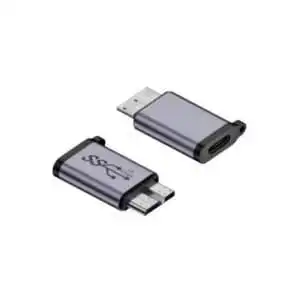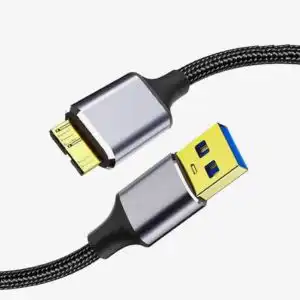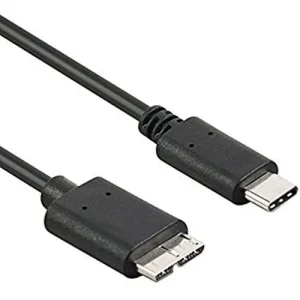
A hard drive cable is the part that usually fails first — the drive outlives the lead, and a drive that has stopped being recognised is far more often a worn plug than a dead disk. Start at the drive rather than at the computer. A portable drive almost always has a Micro-B socket: wider than the Micro USB on an old phone, with an extra block of pins alongside it. A bare 2.5-inch SSD pulled out of a laptop has no socket at all, just a flat edge of contacts, and that takes a SATA lead instead.
Once the drive end is settled the computer end is the easy half — USB-A on older machines, USB-C on newer ones, and both are covered here in both directions, so a change of laptop does not mean a change of drive.
Two things are worth knowing before you order. A bare 3.5-inch desktop drive draws 12V and will not spin up from a USB port however good the lead is, so those need a powered dock rather than a cable. And the small L-shaped lead that runs from a drive to a motherboard inside a desktop PC is an internal SATA cable, which is a different part and not what is on this page.
Speed is rarely the limit. 5Gbps is roughly 500 MB/s, which is quicker than any spinning drive and at the ceiling of a SATA SSD, so on a hard drive cable of this kind the drive sets the pace and the lead is not what holds it back.
Everything here is stocked in Melbourne and ships the same day on orders placed before 10am, with a 90-day warranty. Tell us the drive model and we will confirm which end it takes before you spend anything.
Showing all 4 results